Showing posts with label ramayana. Show all posts

Sunday, August 02, 2020

Civilizational epoch!


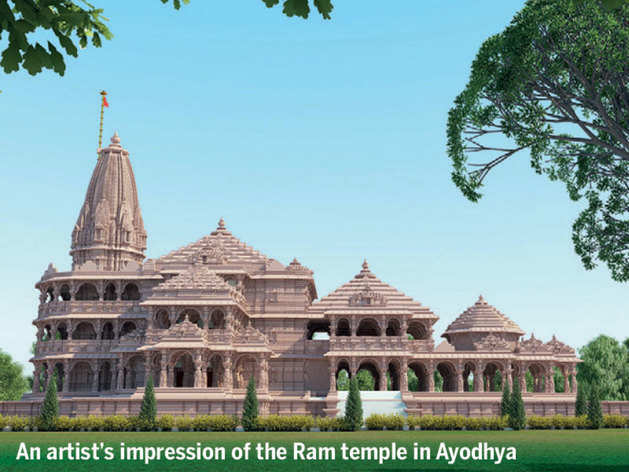
(Picture from here)

On the 5th of August 2020, in the holy Indian month of SrAvaN when the honourable prime minister Narendra Modi lays the foundation to the rAma temple, 
popularly known as SilAnyAs,  at ayOdhya it will mark a civilizational epoch! I will present some points as to why I think so.

 rAma's life as documented first by sage vAlmIki has seeped into the psyche of Indian society like no one else's. The reason for such popularity of the epic is the celebration of rAma in the epic as an embodiment of truth, upholder of righteousness, stickler to principles, unfailing friend, beloved brother, able husband, terrifying foe and so on! In fact the first sarga of rAmayaNam begin by listing of sixteen qualities (some of which are listed above) by vAlmIki and asking sage nArAda about a wonderful being who has all those qualities. nArada tells vAlmIki about rAma and his qualities.

Entire rAmAyaNam can be said to be an elaboration of these qualities and exemplifying the same through the life events of rAma.  The Indian populace and several near by countries also celebrated this description of rAma and made his ideals as their own and thus rAma came to take the centre-stage in the people's lives. While the personal qualities of rAma were aspirational for the populace, his rule of law was a model for the state. 

The 128th sarga of the yudhhakAnDam (please check verses 98-106 in this chapter) gives glimpses of how great the rule of rAma was and how much people celebrated him and looked up to him. The uttarakAnDam gives further details of his great rule. rAmAyaNam is also replete with instances of administrative excellence, rule of law, diplomacy, excelling of citizens, might of a righteous army and accessibility of the leadership to the commoners.

By these two counts rAmAyaNam filled the space for the personal and social ideal of people and the state and led to a harmonious existence people for centuries. It can be arguably said that the foundations of a vibrant culture, logical thinking, aesthetic presentations, evolution of literature and philosophy actually lay in such a model administration which was dubbed as rAmarAjya in subsequent times. 

While the first epic by sage vAlmIki is in samskRit, as regional languages developed, each felt a need for rAmAyaNam in their own language and thus in India now the epic is re-told in various languages in hundreds of different ways. There have been lots of epics written in ancient India. The love for rAma's story is evident in the fact that it is only rAmAyaNam which has captured the imagination of people across generations because of it's ultra natural presentation of human behaviour and emotion and sticking to a principled stand in times of crisis. It won't be an overstatement to say that the love for rAma in people is in fact their love for goodness itself! 

Hence every new born in this country knew about ayOdhya to be the playground of the maryAda purushOttama SrIrAma. Association of ayOdhya with rAma was as obvious as association of sun rise to the eastern direction. It was to be, until we came across the courts of law which valued material evidence more than history of the civilization. In these times when both ideas as well as evidences can be manipulated with a sophistication which forces one to believe, it was becoming increasingly difficult to argue the case that rAma was actually born in ayOdhya and the land on which the 1992-demolished unused structure stood was sacred to the citizens of the country.

It took the people a long time to present their case in a manner the judiciary understood. While they diligently did so, the huge 2019 political mandate to a dispensation favorable to the rAma temple meant that judiciary can't pretend as if the case was not important for people. It examined the evidence  and also respected the pulse and the sentiment of the people and gave verdict in late 2019 giving absolute ownership of the land to the presiding deity rAm lalla virAjmAn. 

The government has been playing fair in not getting entangled in day to day operations at the site and gave up the operations to a trust which it formed under the directions of the honourable supreme court. 

A good nine months after the verdict, other formalities have been completed and we move in the direction of laying of the foundation stone for a grand temple at the site which is the birth place of lord rAma. It is an unbelievable moment for crores of our citizens who were pessimistic about the possibility that rAma will ever return to ayOdhya. 

On 5th August when the honourable prime minister Modiji does the SilAnyAs he would become the chosen child of destiny to have done so. What else can one say about it when rAma returns to ayOdhya after 500 years and this man does the honours of welcoming him. 

May the symbolic return of rAma usher the return of rAmarAjya in our sacred land. In this highly connected world it can influence even more countries to imbibe and adapt those values embedded in rAmarAjya.

Therefore what is going to happen on 5th August 2020 is a civilizational epoch which while celebrating our ancient civilization and values holds hope for a resurgence and celebration of values in our society.

rAmOrAjamaNi sadA vijayatE.... rAma, the crest jewel of kings is always victorious.

jAi SrIrAma.   


Read the Valmiki Ramayanam in English here.

Saturday, January 10, 2015

Sundara kaanda - Ramartham Vaanaraarthamcha

After being reminded of his amazing might by the great bear Jambavantha, Hanuman decides to cross the huge ocean and search for Mother Seetha in Lanka. He gets onto the mountain on the seashore and takes a good look at the task ahead as well as the (otherwise) insurmountable obstacles. He sums up all his strength, takes a deep breath and with a mighty leap takes off into the skies to get across to Lanka. As he pressed the mountain with his feet, it quaked and showered all the flowers that were borne on the trees. The inhabitants of the mountain, animals, snakes and other people fled thinking the mountain is being harmed by a demon. And then they heard the scholars in the sky saying thus:

रामार्थं वानरार्थं च चिकीर्षन कर्म दुष्करम
समुद्रस्य परं पारं दुष्प्रापं प्राप्तूमिच्छति
రామార్థం వానరార్థంచ చికీర్షన్ కర్మ దుష్కరం 
సముద్రస్య పరం పారం దుష్ప్రాపం ప్రాప్తుమిచ్ఛతి
He has set upon this arduous and impossible (for others) task for the sake of Rama and the fellow monkeys and decided to cross to the other side of the ocean ||1.30||
(Sundarakanda: Follow this link for the verses and meanings)
The most wonderful aspect leading to this verse is that Hanuman never even once feels he is doing this to earn personal glory. In this verse he has squarely put the team (vanaras or the monkeys) and SriRama(the "Boss") ahead of himself in the sincere pursuit of the goal. This observation has been made by the onlookers, the scholars in the skies watching over the proceedings. This implies Hanuman has created a strong perception of why he is doing what he is doing. Such perception creation is obviously not possible without strong behaviour. The key point though is that Hanuman never craved to make an impression and build an image for himself. The image built itself based on the manner in which he carried himself. As Jambavan praises him and reminds him of his amazing might, Hanuman grows to gigantic proportions and dwarfs everyone present before him. Yet, he bows to the elders exemplifying humility. Being humble in the backdrop of great accomplishments is a great quality to have. This is important because we never achieve anything in isolation. There are immense contributions of people around us in everything we do. And finally when we realize without the grace of God, we count for nothing, humility and gratitude will automatically appear. The idea is not to belittle oneself and feel insignificant. It is only not to have an exaggerated feeling about oneself. In order to do so, one must place the goal (the work of Rama) and team (people around) before oneself. Thus Hanuman is a great example of working selflessly for the sake of SriRama and his mates. This seems to have brought him immortality and ultimate glory without setting himself to achieve it. The point is further strengthened by Ravana whose sole aim was himself and his pleasures and his glory. In order to achieve that he didn't shy away from taking shortcuts, doing immoral acts, putting the entire state machinery at work to fulfil his desires till ignominy caught up with him and he finally perished becoming the perfect example of how not to be in life. Hanuman's personality traits, work ethic and selflessness stand in stark contrast to Ravana's pride, selfish motives and his obsession with himself. The result is today Hanuman is worshiped as a God and Ravana is remembered for examples of wrong doings. 
At a worldly plane, Hanuman holds lot of examples for us to follow. In our day to day life, we should be valorous like him, giving our best in whatever we do. Excelling in the sphere of our activity should be our goal. That satisfaction is its own reward. "Work is worship, Duty is God", it is said. Finally offering it to one's beloved master and thanking for the opportunity makes one light. Hanuman was well aware that it is Rama who was powering him to do this job and that made his job easier. When the self takes upon the doership, discrimination leaves us. This can potentially make us take wrong decisions. By surrendering to the master and thinking whatever happens is his will and giving our best we don't put the pressure of failing on ourselves and thus usually do a better job. This is a great working philosophy that one should adopt in order to excel. The work we do is always an opportunity. It could have been done by someone else but we got a chance to do it. So we should do it such that we are remembered for that. This is where goal includes and transcends skill.

In the spiritual plane, Hanuman signifies budhhi that losely translates as intellectual aspect. Rama signifies the Supreme soul and Seetha, the individual soul. The union of the individual soul with the supreme soul can happen only when budhhi decides to do it. The individual soul is hijacked by the ten senses that signify Ravana. Saving the individual soul from the clutches of the senses and merging it with the supreme soul is fraught with obstacles. It should be done by budhhi for the sake of the supreme self itself since everything came from that and should ultimately merge in that. It is this symbolism associated with Ramayana that makes it eternally sweet. I wrote about it here quoting Sri Sathya sai Baba.

Read in the backdrop of this, the above verse is really loaded with implications in our worldly and spiritual life. Comments welcome. 

Thursday, January 01, 2015

Sundara Kaanda - Sundare Sundaro Rama...


Sundara kaanda is the fifth of the seven parts that makes up the epic Ramayanam. This chapter exclusively deals with the daring search operation conducted single-handedly by Hanuman, the trusted servant of Lord SriRama for mother Seetha. With no scope for advice or second opinion in this adventure Hanuman solely relies on his judgment and might to wade through the several challenges that come his way and ultimately emerges successful.  Valmiki is at his best expounding the thoughts that run in Hanuman's mind as he undertakes this extremely critical mission alone. There are lessons galore packed beautifully in the Sundara Kaanda. With the grace of the Lord, I endeavor to present one sloka that appeals to me with the meaning and hopefully a contemporary take on the same every week.

To start it off on this holy Vaikuntha Ekadasi day of 2015, let us see the verse that extols the Sundara Kanda. 

सुंदरे  सुन्दरो  रामः  सुंदरे  सुंदरी  कथा
सुंदरे  सुंदरी  सीता  सुंदरे  सुंदरं  वनं
सुंदरे  सुंदरं  काव्यं  सुंदरे  सुन्दरः  कपिः
सुंदरे  सुंदरं  मन्त्रं  सुंदरे  किं  न  सुंदरं ?

సుందరే సుందరో రామః సుందరే సుందరీ కథా
సుందరే సుందరీ సీతా సుందరే సుందరం వనం 
సుందరే సుందరం కావ్యం సుందరే సుందర: కపి: 
సుందరే సుందరం మంత్రం సుందరే కిం న సుందరం? 

Beautiful is Lord Rama in the SundaraKaanda, 
Beautiful is the story
Beautiful is mother Seetha, 
Beautiful is the Ashoka forest (in which She lived)
Beautiful is the poetry
Beautiful is the monkey (Lord Hanuman)
Beautiful is the mantram 
What is it that is not beautiful (in sundara kaanda)?


Sundara kanda full of messages for our daily life presented beautifully. The first of the poets serves a great treat of fact and beauty. Please come, let us follow the trail of lord Hanuman.

Sunday, August 04, 2013

Read Ramayana - an international initiative

Ramayana, the hindu epic that is celebrated as 'adi kavyam', the first among poems, has been digitized! A very pious initiative by Mr. Krishna Sharma is sending out the 24000 verses of the Valmiki Ramayana in small installments of 100 verses every week to your inbox. The rendering contains the original verse in one of the Indian languages (nine major languages have been covered, Devnagari, Telugu, Tamil, Malayalam, Kannada, Oriya, Gurumukhi, Gujarati, Bengali), together with an English transliteration and translation. Sample below.


This is delivered right to your inbox. The content is un-intensive, easy on eye, simple, pleasing to the mind and soul. Ramayana has been cited since time immemorial as a treatise on man's conduct. In recent times there have been efforts to find lessons for management from Ramayana. The point in saying this is this is an epic for all to learn, to assimilate, to understand, to appreciate, to derive bliss. Read it just like you would any of the new releases, without any prejudice of this being a spiritual (only) book and hence of limited use in our daily life. At every juncture you'll see that this book is more relevant to mankind today than ever.

Resource page is here.  Do subscribe here for your weekly dose of bliss.

May the Lord SriRama fill the world and its inhabitants with right conduct and thus establish sustainable peace on the planet. Jai Sri Ram.

About Me

My photo
Love to blog. Every time I turn joyous or in extreme pain, I blog. Huge believer of 'charity begins at home'.