Showing posts with label Spirituality. Show all posts

Sunday, August 02, 2020

Civilizational epoch!


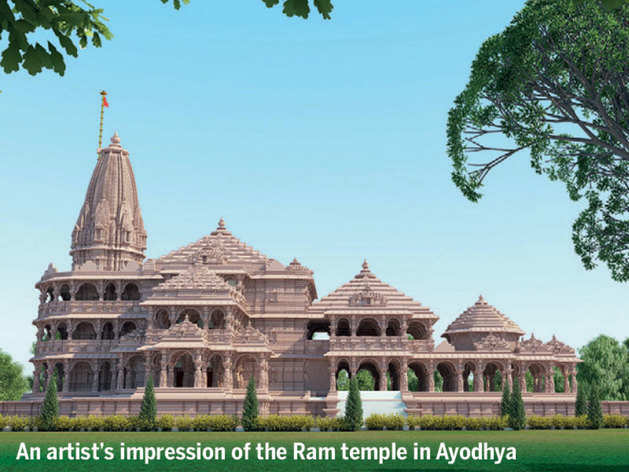
(Picture from here)

On the 5th of August 2020, in the holy Indian month of SrAvaN when the honourable prime minister Narendra Modi lays the foundation to the rAma temple, 
popularly known as SilAnyAs,  at ayOdhya it will mark a civilizational epoch! I will present some points as to why I think so.

 rAma's life as documented first by sage vAlmIki has seeped into the psyche of Indian society like no one else's. The reason for such popularity of the epic is the celebration of rAma in the epic as an embodiment of truth, upholder of righteousness, stickler to principles, unfailing friend, beloved brother, able husband, terrifying foe and so on! In fact the first sarga of rAmayaNam begin by listing of sixteen qualities (some of which are listed above) by vAlmIki and asking sage nArAda about a wonderful being who has all those qualities. nArada tells vAlmIki about rAma and his qualities.

Entire rAmAyaNam can be said to be an elaboration of these qualities and exemplifying the same through the life events of rAma.  The Indian populace and several near by countries also celebrated this description of rAma and made his ideals as their own and thus rAma came to take the centre-stage in the people's lives. While the personal qualities of rAma were aspirational for the populace, his rule of law was a model for the state. 

The 128th sarga of the yudhhakAnDam (please check verses 98-106 in this chapter) gives glimpses of how great the rule of rAma was and how much people celebrated him and looked up to him. The uttarakAnDam gives further details of his great rule. rAmAyaNam is also replete with instances of administrative excellence, rule of law, diplomacy, excelling of citizens, might of a righteous army and accessibility of the leadership to the commoners.

By these two counts rAmAyaNam filled the space for the personal and social ideal of people and the state and led to a harmonious existence people for centuries. It can be arguably said that the foundations of a vibrant culture, logical thinking, aesthetic presentations, evolution of literature and philosophy actually lay in such a model administration which was dubbed as rAmarAjya in subsequent times. 

While the first epic by sage vAlmIki is in samskRit, as regional languages developed, each felt a need for rAmAyaNam in their own language and thus in India now the epic is re-told in various languages in hundreds of different ways. There have been lots of epics written in ancient India. The love for rAma's story is evident in the fact that it is only rAmAyaNam which has captured the imagination of people across generations because of it's ultra natural presentation of human behaviour and emotion and sticking to a principled stand in times of crisis. It won't be an overstatement to say that the love for rAma in people is in fact their love for goodness itself! 

Hence every new born in this country knew about ayOdhya to be the playground of the maryAda purushOttama SrIrAma. Association of ayOdhya with rAma was as obvious as association of sun rise to the eastern direction. It was to be, until we came across the courts of law which valued material evidence more than history of the civilization. In these times when both ideas as well as evidences can be manipulated with a sophistication which forces one to believe, it was becoming increasingly difficult to argue the case that rAma was actually born in ayOdhya and the land on which the 1992-demolished unused structure stood was sacred to the citizens of the country.

It took the people a long time to present their case in a manner the judiciary understood. While they diligently did so, the huge 2019 political mandate to a dispensation favorable to the rAma temple meant that judiciary can't pretend as if the case was not important for people. It examined the evidence  and also respected the pulse and the sentiment of the people and gave verdict in late 2019 giving absolute ownership of the land to the presiding deity rAm lalla virAjmAn. 

The government has been playing fair in not getting entangled in day to day operations at the site and gave up the operations to a trust which it formed under the directions of the honourable supreme court. 

A good nine months after the verdict, other formalities have been completed and we move in the direction of laying of the foundation stone for a grand temple at the site which is the birth place of lord rAma. It is an unbelievable moment for crores of our citizens who were pessimistic about the possibility that rAma will ever return to ayOdhya. 

On 5th August when the honourable prime minister Modiji does the SilAnyAs he would become the chosen child of destiny to have done so. What else can one say about it when rAma returns to ayOdhya after 500 years and this man does the honours of welcoming him. 

May the symbolic return of rAma usher the return of rAmarAjya in our sacred land. In this highly connected world it can influence even more countries to imbibe and adapt those values embedded in rAmarAjya.

Therefore what is going to happen on 5th August 2020 is a civilizational epoch which while celebrating our ancient civilization and values holds hope for a resurgence and celebration of values in our society.

rAmOrAjamaNi sadA vijayatE.... rAma, the crest jewel of kings is always victorious.

jAi SrIrAma.   


Read the Valmiki Ramayanam in English here.

Tuesday, April 28, 2020

Sankaracharya's lasting legacy


Sri Sankaracharya, also known as Adi Sankara was a phenomenon who unfortunately is not as widely known as he should be in India and the world at large. His single biggest achievement has been to traverse the length and breadth of India by foot, a whopping 18000 Km by very conservative estimates, writing up contemporary commentaries on the scriptures that dictated the way of life in bhArat, conquering in controversies, establishment of centers of excellence and creating a legacy that is alive today and by virtue of all those ensuring a spiritual integration of bhArat.


Talking of Sankara’s legacy, what is his most lasting legacy? Is it the number of treatises and commentaries that he has written, viz. commentaries on brahma sUtras, upanishads, bhagavadgIta ; hymns that are both poetic and philosophical such as saundarya lahari or SivAnanda lahari or bhajagOvindam; or are they the large number of eulogies he has composed on almost all gods; or is it the conquests against those who controverted with him; is it the establishment of centers of excellence for practice of sanAtana dharma aka mutts; is it  giving jnAna the highest place? This list of course is just the tip of the iceberg of his extraordinary accomplishments in course of a life that lasted but 32 years. Arguably, his most lasting legacy has been his approach to the goal of spiritual integration of bhArat.

His mission of the spiritual integration of bhArat involved the following key aspects, viz. Expertise, Communication, Listening, Influencing, Transforming and Creating – all key aspects of leadership that we think of today.

Expertise

Sankara’s prodigious talent saw him mastering everything he came across in no time. He mastered the scriptures at a very young age. Perhaps a very early testimony of his command over language and learning is the spontaneous eulogy of goddess Lakshmi in the form of the kanakadhAra stOtram – a eulogy that showered gold in the house of a poor lady. The versatility he displayed in his genius at a very early age was an ample demonstration of his expertise. This reflected amply during his stay with the guru gOvinda bhagavatapAda for whom he was a privilege to teach!

Communication

His guru clearly saw that Sankara was made for higher accomplishments and that his power of articulation should not be wasted upon. He also seems to have recognized that an able person should be in an ecosystem where his talents are appreciated and also provides him with a stage to test his ideas. Hence guru gOvinda directed Sankara to go to kASi which was a center of learning brimming with scholars and also urged him to write commentaries on the brahma sUtras and upanishads. Thus kASi became the center in launching Sankara to the national scene. There was a fertile ground of seekers available here and Sankara excelled in communicating his thoughts on the scriptures in a succinct manner which brought him many a disciple. vyAsa himself had a duel with Sankara here in form of an old man from whom Sankara faced the severest test of authenticity of his interpretations and he graduated successfully in this test. Thus this period of stay in kASi where Sankara communicated vEdic philosophy to humanity in a contemporary manner was the key not only to hand over these works to posterity but also to gather the human resource needed in further stages of his mission.

Listening

Authoring impactful and authentic treatises on scriptures resulted in several scholars surrendering to him as his disciples. It was now time for Sankara to travel the farther lands and bring people into the fold of sanAtana dharma. He met with leaders of diverse faiths in this sojourn. He controverted with them and in the process he listened to their view point carefully before calling their bluff. It is never possible to refute another argument convincingly unless one listens well. The tradition of debate that Sankara brought forth in his conquests far outshines any other conquest in the history of mankind. There was no imposition on a view point but logical discussions on view points with both sides listening honestly. Their commitment to pursuit of truth is really admirable and is a necessity of the times today.

Influence

That Sankara heard diverse viewpoints ranging from materialism to ritualism to nihilism but ultimately won them over and helped each one identify other as a pilgrim in the journey is Sankara’s greatest achievement. These people were no pushovers and were deeply steeped in their pursuits. The amount of influence that he could create with his precise articulation to achieve this is indeed stunning.

Transform

Sankara however didn’t make his opponents change their pursuits but only made changes which helped them to relate to the ultimate goal through that path which they gladly adopted and accepted him as their guru. Sankara seems to have influenced and integrated them using what is known as a “merger and acquisition” strategy well known in the contemporary parlance today. This helped him to achieve far more than what 32 years on earth could afford! The transformation he caused can be further gauged from the devout followers he commands millennia after his withdrawal from the physical world.

Create

All the above leadership qualities enabled Sankara to create institutions for eternity. He created institutions in various parts of the country, seemingly keeping geography in mind. These mutts served as local powerhouses radiating his teachings and helping people in course correction from time to time. Even more than building the institutions he institutionalized the ways of worship with a clear view of the goal of life which is still the guiding light for seekers of the sanAtana dharma. Thus every home became a torchbearer of sanAtana dharma.

His achievement

The sanAtana dharma defines self-realization as the goal of life. As life evolved and population became more diverse the paths of self-realization also got diverse. From this diversification emerged several ways of attaining salvation, viz. karma kAnDam – ritualism, patanjala – practice of yOga and pranayama, sAnkhya – enumerativism, charvaka – materialism, SUnyavAda – nihilism to name a few, by the process of reductionism. The reductionistic practices got so deep rooted over a period of time that they lost sight of the ultimate aim for which the path was laid down. This led to conflicts and claims of superiority over one another as is common in any society with multiple ways of life. This was threatening the very fabric of sanAtana dharma which is when Sankara was born.

The dating of his advent is highly variable and historians differ in their assignment of the period widely. But by conservative estimates Sankara reigned on this land no less than 1200 years ago. He was born in kAlaDi near the present day Ernakulam in kEraLa. His legend reconstructed through hagiographic accounts of his conquests is much of the basis to know about his birth and life. But a lot more comprehensive glimpse of his personality can only be gleaned through his works.

Coming back to the society of those days - torn with diverse practices arising out of a common goal of life, Sankara’s mission was the spiritual reunification of the faiths and people. He noticed that various faiths differed in practice but forgot the reason for the practice. It was akin to forgetting that it is actually the light of the same Sun that enables us to see the various objects in the world.
Sankara emphasized that it is the same Sun that is shining in the pot, puddle, pond as well as the river. Therefore, the different water bodies share the commonality of reflecting the same Object of illumination. If you want to see the Sun, you could see him in any one of them equally well. The same is true with the ultimate purpose of life which can be attained through any of the different practices provided the goal is clear.

Difference is seen when we concentrate on the waterbody but oneness is seen when we concentrate on the same Sun that is reflected. This practice of perceiving this oneness in the creation is advaita or non-dualism.

The back-to-the-drawing-board approach of Sankara was refreshing. With this conviction, he set forth on his conquests with proponents of the diverse faiths and won them over in vAdas - debates. The greatness of the debates is that the “loser” didn’t lose the debate, rather he was elevated to a higher purpose in the pursuit of his faith. No one feared a loss in this duel but it was an honest enquiry of truth which if it was convincingly different from one’s views was not only welcomed but embraced.

Sankara’s advaitavAda concentrated on the essence and goal of myriad practices and therefore gave each its own place in the pursuit of the truth. Thus no faith was coerced into sanAtana dharma by enticement or enforcement. They just re-assumed their pristine forms in the light of the conviction of the goal that Sankara shined upon them. Thus Sankara achieved the spiritual unification of the various faiths of this land and that of bhArat and established harmony in the society.

This achievement of reunification of bhArat by Sankara must rank among the greatest efforts in the world for it was not done by use of any force but by sheer vAda (debate and logic) and an honest pursuit of truth. This way of resolving conflicts by debate is the greatest gift of bhArat to the world. This is what marks as an ancient and intellectual civilization. And we owe much to Sankara for that.

In the second and concluding part of this article I will attempt to outline what modern day scientists and pursuers of truth can learn from Sankara. Coming soon. Stay tuned.

Tuesday, August 01, 2017

daSama skandHam - The Tenth Canto - 3

daSama skandham or the Tenth Canto - Part2

Link to the Telugu page

The coming of nArAda to mathura


10.1-52.


One day sage nArAda appeared in mathura all of a sudden and went to kamsa's residence. Finding kamsa in solitude, the sage went to him and said these words. Listen, "nandA, his wives, family and friends who live in rEpalle (Vrindavan), dEvaki and all the womenfolk vasudEva and all the yAdavA's are verily forms of Gods and nor mere humans. O kamsa you are a demon. vishNu, Who is the very form of all Gods and wields the discus will be born as the son of dEvaki. He will slay the demons who are possessing the earth and causing havoc. Having said these prophetic words, nArada left for his abode.

10.1-53.

kamsa's anxiety swelled upon hearing nArAda's words. Learning that yAdavA's are Gods (they don't battle an eyelid - animisha) and that he is the kAlanEmi who will be slain with the sword of srImahAviShNu his mind was filled with worry...


dEvaki and vasudEva in the prison


10.1-54.

kamsa was upset and outraged with anger. He at once imprisoned his sister dEvaki and brother-in-law vasudEva. Thinking all their children to be forms of hari (the remover of miseries of devotees - viSHNu) he slayed all the newborns as soon as they were born. Inflamed, he imprisoned his pure-hearted father ugrasEna who ruled over the land of the yadus, bhOjas and andhakas and began to rule over these kingdoms himself.

10.1-55.

Corrupted by the lust for power kings execute their siblings, brothers, friends and relations without discrimination in order to safeguard their life.

10.1-56.

And then with the help of several demons such as bANa, bhauma, mAgadha, mahASana, kESi, dhEnuka, baka, pralamba, trNavarta, chANUra, muSHTika, ariSHTa, dvividha, pUtana, kamsa waged war over the yAdavAs. Having lost the battle, many yAdavAs lost their face, eschewed their titles and power and fled to other kingdoms like nishadha, kuru, kOSala, vidEha, vidarbha, kEkaya, pAnchAla and SAlva for asylum. Other yAdavAs eschewed vengeance and remained in mathura serving kamsa.

10.1-57.

One after the other in succession kamsa killed six of dEvaki's sons. And then dEvaki conceived for the seventh time as the great SESHA with the attributes of the magnanimous viSHNu entered the womb of dEvaki and took shape of the fetus.

yOgamAya Commanded


10.1-58.

Taking note of the happenings and grasping that the yAdavAs who have their faith in Him and live in mortal fear of kamsa, hari Who is the very form of the universe, summoned goddedd yOgamAya and commanded her thus...

10.1-59.

O auspicious bhadrA, descend onto the dwelling place of gOpikAs and gOpAlAs who live near the stables and tend cattle in vrindAvan. vasudEva's wives have been imprisoned by kamsa. However one of the wives rOhiNi, has sought refuge in rEpalle (vrindAvan) and is living in the gOkula of nanda. That beautiful eyed rOhiNi has numerous good qualities in her. Embodying my valor, AdiSESHA is growing in the womb of dEvaki. Please go and duly and skillfuly transplant that foetus into the womb of rOhiNi. I shall be born to dEvaki with all My attributes. After transplanting AdiSESHA, you be born as the child of nanda and yaSOda.

10.1-60.

You are the harbourage of all forms of wealth. You fulfil the desires of the devotees. O embodiment of auspiciousness, people worship and serve you with devotion and offer sacrifices and presents.

10.1-61.

In various places you are celebrated assuming fourteen different names, viz. durgA, bhadrakALi, vijaya, vaiSHNavi, kumuda, chanDika, krSHNa, mAdhavI, kanyaka, mAya, nArAyaNi, ISAna, SArada, ambika. He commanded her to leave on her mission having made all this known to her. Considering the command of viSHNU as a great blessing, the yOgamAyA dEvi at once left the abode of viSHNU and entered the earth. 


rohiNi delivers balabhadra


10.1-62.

yOgamAya extracted the resplendent fetus from the womb of dEvaki and transplanted into the womb of rOhiNi. People around dEvaki were saddened by her purported abortion of pregnancy.

10.1-63. 

Then...

10.1-64.

rOhiNi gave birth to a great son. By virtue of his exceeding strength and valor he was called balabhadrA. By virtue of conferring joy to the worlds he came to be known as rAmA. Having been born by fetal transplant, he got the name samkarSHana.

10.1-65.

After that ...

10.1-66.

vasudEva shone resplendently as the attribute of the Lord of auspiciousness and wealth srImahAviSHNu entered into his being and filled his mind. Perceiving this, all the beings and elements were filled with joy.

10.1-67.

vasudEva inducted the radiance of the Lord of lakshmi - That supreme soul Which is embodied in the entire creation, is utterly holy and protects all the worlds, into dEvaki. Receiving the radiance of viSHNu, dEvaki shone with a new splendour just as the eastern direction is filled with the moonlight before the moon rise.

10.1-68.

Listening keenly, parikshit curiously asked what transpired further. suka started to narrate thus.

10.1-69.

SrIhari, in Whose stomach are lodged all the universes began to grow like the intensity of the morning Sun in the womb of dEvaki in order to protect the world.

10.1-70.

Then...

10.1-71.

(signs of pregnancy in dEvaki)

As SrIhari grew in the form of fetus in dEvaki's womb: 

the conceited ones lost their glow in the face while the beautiful woman dEvaki lost the dullness in her face and shone with brilliance;

the fame of the enemy kings blackened while the nipples of the dEvaki darkened;

the abode of the evil people was filled with smoke as hair sprouted on the abdomen of dEvaki;

the enemies lost the appetite due to anxiety while the lotus-eyed dEvaki lost her appetite;

the enemies became motionless and tired as dEvaki started to feel lazy;

the enemies prepared to bite the dust as dEvaki hungered for taste of clay (geophagy!).

10.1-72.

Further...

10.1-73.

As the One enshrined in all the five elements grew in dEvaki's womb:

As if the element water came to visit the child in the womb, she began to sweat profusely.

As if the element fire came to offer obeisance to the divine child in the womb, she shone brightly.

As if the element air came to worship the to-be-born she began to breathe heavily.

As if the element earth came to honor the child, her hunger for clay swelled.

As if the element expansive ether came to hail the child, the moon-faced lady's waist expanded.

10.1-74.

As the days progressed...

10.1-75.

Since the divine child growing in dEvaki's womb was viSHNu who is the slayer of demons:

As dEvaki's waistband tightened the mangaLasUtra (auspicious thread of married women signifying the happily married status) of the wives of the enemies loosened;

As the beautiful form of dEvaki assumed brilliance, the wives of the evil people lost their shine;

As dEvaki began to feel burdened by her jewels and necklaces, the necklaces of the wives of enemies loosened;

As the cuckoo-voiced dEvaki's belly gradually grew bigger by virtue of the divine child in her womb, the enemy's wives aborted;

As the days of dEvaki's delivery neared, the days of widowhood neared for the wives of the unfavorable ones.

10.1-76.

Thus...

10.1-77.

dEvaki held in her womb, the One who has the entire Universe in His belly. Her oppression in the confinement in her brother's place resembled that of erudition in one bereft of wisdom and that of a lamp lit inside a pot.

10.1-78.

Startled by the increasing glow in the face of dEvaki, the best among women, enhanced brilliance of her being and growing beauty, kamsa anxiously reflected thus...

10.1-79.

"Watching dEvaki through her expectant days, my heart is feeling heavy. I have never felt like this before. Perhaps this is because viSHNu has entered into her womb."

10.1-80.

"How should I strategize, what is my action plan? How can I slay this woman, my sister and whose gestation is nearing term day by day. If being indifferent, I indeed do away with her will my fame, wealth, longevity and righteousness not wither away?"

10.1-81.

"A brute who is unmindful of relations will be reproached as being just a corpse while being alive. They will further say such a person will go to hell. Is it any life to be lived being called an evil-doer?"

10.1-82.

Eschewing brutality, assimilating courage, assuming augustness and proclaiming prowess he determined within himself that it is a harmful undertaking to slay sister and went silent...

10.1-83.

However kamsa was still mortally afraid deep within. "The hostility that cannot be suppressed is being born! This moon-faced woman will perhaps give birth to chakri, the one wielding the discus. I shall slay the new born right in the labour room". Thinking thus, he waited on...

10.1-84.

Consumed by the hostility with SrimahAviSHNu and immersed in those thoughts, he completely failed to attend to other duties.

10.1-85.

Moving, eating, drinking, walking, sitting kamsa has thoughts of only SrimahAviSHNu. Overpowered and consumed by hostility, unceasingly he thought of hari as encompassing the entire universe.

10.1-86.

Further...

10.1-87.

Whatever sound that he heard he thought that to be the voice of hari;
Whatever he saw with his eyes appeared to be the form of hari;
Even if a blade of grass touched him, he perceived it to be a smack from the hand of hari;
Whatever fragrance that came his way seemed to be the perfume of the garlands of hari;
Whatever words were spoken he misapprehended if it was the name of hari;
Whatever thoughts that came across his mind, he thought those to be about hari and was thus infuriated through every action of his own.

daSama skandHam - The Tenth Canto - 4 >>>

Thursday, July 13, 2017

daSama skandHam - The Tenth Canto - 2


10.1-20.

One day SUrasEna's son vasudEva entered into wedlock with dEvaki and filled with joy at this festive occasion they started in procession in a chariot. At that time kamsa, the son of king ugrasEna joyously took the reins of the chariot sending them to raptures and began to chauffeur them out of his affection for his sister dEvaki.  They were preceded by a number of musicians playing relentlessly on the trumpets, percussion instruments and blowing the conch. As the festive procession continued dEvaki's father dEvaka decided to shower gifts on his daughter on this auspicious occasion.

10.1-21.

dEvaka gifted eighteen hundred chariots with all facilities, four hundred fully gold-decked huge elephants, ten thousand horses and two hundred stylish maidens to serve dEvaki and keep her company. As the newly wed couple started their journey on that royal road....

10.1-22.

kamsa loosened the reins to let the horses hasten the chariot. All of a sudden kamsa felt disturbed deep within as an unseen voice from the skies thundered thus...

10.1-23.


Prompted by the gleeful appreciations of your sister you are lovingly chauffeuring the chariot. However, you know not that, the eighth child to be born in the womb of this polite and beautiful sister of yours shall slay you!

Link to Telugu page

10.1-24.

kamsa, the one to bring disrepute and destruction to the bhOjAs was shocked upon hearing the ethereal voice that spelled his doom and his shoulders shuddered. He pulled his horrifying sword out of its sheath, caught hold of the braid of dEvaki without the least consideration of being siblings, unmounted her from the chariot to slay her. vasudEva rushed to him at once.

10.1-25.

Approaching kamsa, the sin-hearted, hubris filled, consumed by the raging fire of anger, vasudEva used his sweet and nectarine speech to calm down kamsa and started speaking so...

10.1-26.

Alas! You are the elder brother of dEvaki. You should shower her with gifts of gold and clothes. Or you should felicitate her with sweet speech. Instead you seem to rely on this unseen voice and believing that to be true you are out to slay your sister! O brother, please withdraw yourself, bear patience. This doesn't befit you. I beseech you, please do not kill her.

10.1-27.

Further...

vasudEva's dhArmic counsel


10.1-28.

Your sister is an innocent and weak lass. She is pure-hearted and has only your welfare in mind. Based on the unseen voice you are setting out to dis-honor her. Alas, O meritorius one and born in a great clan, does this slaying of your sister out of anger befit you? Contemplate on it O lord of bhOjAs

10.1-29.

Death is also born as soon as one assumes a physical body. The elemental body eventually merges back in the five elements either today or tomorrow or after a hundred years. The indweller jIva sheds its current body, and assumes another life form depending on the merits or sins that have been committed by the previous body just as the caterpillar raises the front part of the body to mount on another leaf and then drags the rear part from the previous leaf. As if the experiences of wakeful state appear clearly in dreams, the accumulated karma of the jIva follows it birth after birth.

10.1-30.

Carrying the previous impressions of the sins and merits begotten in the previous births, the mind of the jIva in a given body is perturbed and follows the senses with celerity. Following the senses thus, the accumulated karma is not destroyed even if the jIva assumes multiple births.

10.1-31.

Just as the reflection of the Sun and the Moon in pots filled with water wavers due to the wind, the jIva assumes a body befitting its past karmas and moves therein zealously.

10.1-32.

The good and bad that one experiences is verily due to the karma performed by them. It is only the performer of the karma that is responsible for them. This is true even for Lord brahma. This being the case there is really no use trying to judge others (and blame them for one's situation).

10.1-33.

Therefore one should never cause harm to others. Would causing harm to another because it is beneficial to one be ever condoned? Can one escape the result of such a bad karma?

10.1-34.

Although she is related to you as a younger sister, she is indeed like your daughter. She has a good character and is worthy of honour. She is young, a bride who is radiant and opulent. But she is forlorn, terrified and is shuddering. I bow to you, O compassionate king kamsa, be kind and merciful towards her.

10.1-35.

Thus vasudEva spoke endeavouring to cajole kamsa through wise counsel  as well as frightful words. However, those words had no calming effect on kamsa. His angry gaze was raining fire and bereft of any compassion he was determined to kill that beautiful dEvaki. Sensing that his words had no effect on the foolish kamsa, vasudEva started to deliberate within himself his further course of action...

10.1-36.

One cannot justify cowardice by saying death is certain and succumb to situations. As far as one's intellect can take, one should endeavour to protect oneself spiritedly on the basis of his own strength.

10.1-37.

Having determined so...

10.1.38.

The best course to follow today is to avert danger to this woman by promising to surrender the newborns. Who knows the future! If this feme covert survives today perhaps a more lasting way-out can be found later. Even if sons are born to me and their immediate death is imminent in his hands, would not fate catch up with him? Wouldn't there be a way to safeguard the newborns? Perhaps there will be. 

Raging forest fire spares the near-by trees but leaps and guts the trees that are very far. Even so, one's own karmas have the far reaching consequences of causing one's own birth and death. Therefore, why stutter.

10.1-39.

It seems just to rescue my wife by promising to surrender the newborn sons. If he spares my wife now, perhaps by the time sons are born, situation would overturn. Would God not come to the rescue by then?

10.1-40.

The ethereal voice earnestly declared that the child born in dEvaki's eighth pregnancy shall kill kamsa. Why would it not happen? It is best to immediately secure the release of my wife. Thinking thus, vasudEva...

10.1-41.

Speaking softly and acting swiftly vasudEva felicitated kamsa with persuasive speech and a smiling countenance although he was inflamed within.

10.1-42.

O kamsa you are worried to learn from the ethereal voice that you will die in the hands of the son born to this beautiful woman. I assure you that I'll serially hand over every son who is born of her to you so that you can kill them.

10.1-43.

Hearing these assuring words of vasudEva, kamsa nodded his head in satisfaction and accepted the proposal. He spared his sister dEvaki and went off to his abode. vasudEva and dEvaki heaved a sigh of relief and having reached their abode, lived there happily. Days passed along in this manner.

10.1-44.

Although suffering constantly at the hands of kamsa, dEvaki basked in divine feelings and gave birth to eight sons and a daughter every year.

10.1-45.

Among them,

10.1-46.

The first son born to that woman of beautiful teeth dEvaki was named kIrtimantha. As soon as he was born, vasudEva courageously brought the newborn to king kamsa true to his word without feeling greedy about the offspring.

10.1-47.

Without going back on the given word, without resorting to betrayal, without feeling of angst, the courageous vasudEva handed over his newborn to the enemy. Is there anyone more brave than vasudEva?

10.1-48.

O king (suka addressing parikshit), 

for the one who is established in truth what is impossible to accomplish? 
for the one who is established in awareness, is there any attachment?
for the one who is established in unflinching devotion to God, is there anything that cannot be given away?
for the one who doesn't take cognizance, can any harm be caused?

10.1-49.

kamsa spoke thus, appreciating the manner in which vasudEva stood true to his given word and surrendered his newborn.

10.1-50.

O vasudEva, take away this son of yours. I am not in danger due to him and hence I am not angry with him. It seems your eighth son will cause my death. I shall kill him when he is born.

10.1-51.

Hearing these words of his evil natured brother-in-law, that vasudEva, at whose birth trumpets blew, did not feel overjoyed, was overcome by anxiety and took his son back. Then...

Coming of nArada to mathura

Friday, July 07, 2017

daSama skandHam - The Tenth Canto - 1

I wrote about SrImad AndhrabhAgavatham a couple of years ago. This is an all time great work of poet pOthana in the 14th century. The work is celebrated for its devotional overtones, story telling, amazing use of the Telugu language, lucidity and simplicity. A study of this is as much a treat in knowing the mythology as it is about an appreciation of Telugu grammar and above all it drives home the requirement for bhakthi in each of the seeker to attract the grace of the Lord.

Please visit the web site: telugu bhAgavatham. It is an outstanding work of a team of volunteers led by brahmaSrI sAmbaSiva rao gAru, who in the purity of their heart and their labor of love have undertaken the task to digitize the work and bring it forth to devotees along with word meaning and overall import of each poem. There are nearly 10000 padyams in this work. The work is also available as an Android app

For a long time I've been asked by my non telugu friends if an English adaptation of the great work of pOthana is available. I haven't found any. While sending a-padyam-a-day to my Telugu friends I was inspired to this idea of translating a-padyam-a-day from chaste Telugu to manageable English. So here is an attempt, starting with the tenth canto of bhAgavatham, the chapter that describes the life of srI kriShNa. I'll keep updating this page every 2-3 days, so please keep coming back. 


10.1-1.

Oh, the One Who has broken the bow of Siva;
Oh, the One Who protects indrA and his ilk by slaying his enemies;
Oh, the One Who is the crest jewel of the highly esteemed kAkutsA dynasty;
Your glory, oh king srIrAma, is spread all over like the light of full moon;
Kindly accept this offering of mine.

10.1-2.

sUta, the sage highly skilled in the narration of purANas said to the ones of great attributes - Saunaka et al, “Parikshit submitted thus to the great sage Suka…”


10.1-3.

You have narrated to me the stories of the dynasties of solar and lunar lineage. I have listened with great sense of awe, the lives and conducts of great kings in these lineages.

10.1-4.

How did the birth of Sri Mahavishnu happen in the clan of yAdavAs, the men of great character? How did HE grow up among them, what sport did he resort to in various times. Kindly describe these to me.

10.1-5.

The praise of srI mahAvishnu is the pill for the ills of mundane ways of life. Joy wells up in the heart when you listen to it. Those desirous of liberation seek it. Only an animalic person would ever say his ears had enough of it (hari’s praise).

10.1-6.

The army of the kauravas led by bhISHma is invincible even for the gods. With what kind of boat did my forefathers conquer this sea of an army as easily as crossing the stride of a child!

10.1-7.

I was lifeless in the womb of my mother having been hit by aSwathhAma when the Lord holding the discus came to save me and provide a heir for the sons of kunti

10.1-8.

HE, the purusHA principle, fills Himself in the entire Time and Forms and is present within and without every single being. Being present so, He confers liberation on all the beings (jIvas) by saving them from the cycle of birth and death. Kindly describe to me in detail the life of such purushOttama.

10.1-9.


Best among yOgis, you have told me that balarAma is the son of rOhiNi. How then was he present in the womb of dEvaki without being in another body? Why and how did the lotus eyed kriShna leave his father's house and go to the village rEpalle (brindAvan). In whose home did He stay there and what all acts did he perform there? Why did He have to kill his maternal uncle kamsA? How long did he live on the earth? How many consorts did He have? How was He disposed towards them? What all did He do there? Please be kind to describe to me the entire story of mAdhava.

10.1-10.

Further, parikShith submitted thus.

10.1-11.

My body is sustained by drinking deep the nectar of the stories of hari that is emanating from the lotus of your face. Depression has deserted me. Both thirst and hunger have departed from me. My mind is thrilled with excitement.

10.1-12.

Hearing these words of the king, that son of vyAsa, Suka spoke as follows.

10.1-13.

The stories of viShnu purify the ones desirous of always listening to His stories and also the ones who recount those just as the holy stream of water that emanates from His lotus feet.

10.1-14.

O King, listen! Earlier as thousands of demonic kings spread their might on earth, replete with regal pomp and conceit, mother Earth having been unable to bear them any more, took the form of gOmAtha (cow) and approached the lotus-born brahmA crying inconsolably. Lord brahmA calmed and consoled the desolate mother Earth with his speech and contemplated on the course of action. He went to seek help of srImahAviSHNu along with mother Earth and other gods. Contemplating on Lord viSHNu through the hymn purusha sUktam, He entered in to the wondrous samAdhi state. Returning from that deep state of communion with the Lord viSHNu, the One born from the water-born lotus (brahmA) addressed the gods and mother Earth with love and happiness about the voice of God that He heard in that state.

10.1-15.

O gods, please go and incarnate on the earth with your attributes in the clan of yAdavas. The Lord of lakshmi will happily be born as vasudEva's son and relieve the burden of mother Earth.

10.1-16.

O angels, the daughters of the gods, please deign to incarnate on the earth with beautiful forms in order to serve the Lord hari. AdisEsha, the serpent on which Lord rests will precede Him and be born as His elder brother and bring joy to Him.

10.1-17.

Goddess mAyA, the illusory power that drives the whole world and causes infatuation in the unrealized will also incarnate with her attributes as per the order of the Lord and carry out a specific task.

10.1-18.

Thus, having convinced the gods and consoled the mother Earth, Lord brahmA left for His abode. 

(Moving over to the earth) Then the lord of the yadUs, sUrasEna made mathurA his capital city and ruled over the states of sUrasEna and mAthurA.

10.1-19.

O King, in earlier times that city of mathurA where the Lord of prosperity nArAyaNa happily and lovingly resided became the prime city for all the kings of the yAdava clan.

About Me

My photo
Love to blog. Every time I turn joyous or in extreme pain, I blog. Huge believer of 'charity begins at home'.