Showing posts with label Travelogue. Show all posts

Thursday, January 01, 2015

Boat trip to Bhadrachalam from Rajahmundry

Rajamundry is synonymous with the river Godavari. It is impossible not to have images of the huge bridge across Godavari flash across the mind at the mention of Rajamundry. The river seems most prominent almost in the last leg of it's journey to the Bay of Bengal. Contained in a small dam in Dhawaleswaram the river forms a delightful delta and irrigates the plains of the Godavari districts giving it the title The Rice bowl of Andhra Pradesh. The region is not just rich in agriculture, it is also a nursery of Indian culture with several Vedic pundits of great repute hailing from here. The banks of the river at this place are also famous for performing obsequies to the departed souls. The river absorbs the mortal remains of people of the area. So it is natural that Godavari evokes melancholy, philosophy, hope, life. Originating at Nasik, the land of Shiva in Maharashtra, the river enters Telangana at Adilabad before touching the feet of Goddess Saraswathi in Basara. Then it flows into the forests of Dandakaranya where it is sanctified further by the presence of Lord Rama at Bhadrachalam. This region sees the convergence of four states, Telangana, AndhraPradesh, Odisha and Chattisgarh. Thick forests and high hills are the mark of this territory. It is in these forests that Sri Rama is said to have lived during His years in exile prior to the abduction of Seetha. Godavari meanders through the hills of this area generating many a scenic beauty and supporting a wonderful ecosystem. Many a tributary pour into Godavari around here and contribute substantially to enable life downstream.


On such a holy and full of life Godavari when there is a boat that takes you to the abode of Lord SriRama at Bhadrachalam, can the excitement be contained? No. We looked forward to this trip ever since we finalized this trip a few days before. Punnami travels was our agent for the trip. We boarded bus at Rajahmundry at 8:00 AM and drove nearly 50km to Polavaram. The dock yard was full of double decked boats with the ground floor air conditioned and the first floor providing a nice view of all around, Our boat had nearly 200 people. I must admit to being a bit nervous as the date of sail approached. But as we boarded at 09:30 AM all that was forgotten and eyes feasted on the vast expanse of the river. Just as we started the guide called attention to a water tank atop a hill. This was part of the Sri Sathya Sai drinking water project for east Godavari district. This was the elixir of life that Swami has gifted to the poor of this area. 


As we relished the nature all around us, with birds flying by the waters, hills majestically looking over the river, the breakfast quietly went in. Soon shutter bugs got busy. Every scene looked photogenic! This confluence of the blue, several shades of green, brown hues didn't allow our cameras to hibernate. 


The first stop was in less than an hour at the temple of Goddess Gandi Pasamma. We had darshan and the boat proceeded on to the much talked about destination of papidikondalu, a.k.a, papikondalu a.k.a. papi hills which was about 50 km upstream. We motored against the current at a good pace and while some looked around, clicked around, others were engrossed in some on board entertainment provided by some professionals. The beat rich songs played and people gyrated and threw their limbs in the air calling it dance!   sure . It surely helped provide a good mood on board. 

Lunch was served by 12:30 PM and soon it was time to brace for the view of the papidikondalu where Godavari flows in between two hills making it both narrow and deep. The hills are so named as the river appears like the hairline of a traditional Indian woman cutting through the hills that appear almost black due to the dark green cover of the thick forests.


In between the hills, the current takes a right and a left turn and the whole experience even if nothing out of the world is pretty pleasing. Within a few minutes of passing this landmark, we reach Perantalapalli. A small village in the east Godavari district that houses an ashram of the celebrated Sri Ramakrishna. This really gives you an idea of how deeply spirituality has seeped in this country making it a holy land. There is also the temple of Lord Visweswara in the ashram. We had to check out of the current boat here at 3:00 PM. After praising the lord with chants of Namakam and chamakam we boarded another boat and reached Kosavaram after a one hour ride.


It was almost a 70km drive by road from Kosavaram to Bhadrachalam. The tour operator doesn't provide you with anything luxurious. 11 of us got into Tata magic and squeezed in warmly in the fast approaching dusk that lowered mercury considerably. Spirited bhajan singing from each of us ensured that the discomforts were not felt and kept our mind focused on the Lord of Bhadrachalam. Finally Bhadrachalam was reached around 8:30 PM. We retired for the night and next morning hastened to have the darshan of the Lord.

The temple at Bhadrachalam was built by Kancherla Gopanna a little over 300 years ago. He built the Rama temple with tax money that was collected and was imprisoned by the King Tanisha. He sat in the prison and pleaded with Rama in spontaneous outpouring of devotion, praising, pleading, coaxing, cajoling alternating between bliss and desperation and composed songs. Pleased with this devotion, Rama and Lakshmana came to the King and returned the money spent for the construction of the temple thus releasing the dear devotee. He came to be known as Ramadasu and the songs are popular among musicians and commoners of Andhra Pradesh alike.

The Lord was decked in the SriRama avataram. Mother Seetha seated on the left lap and Lakshmana to his right, both holding their mighty bows and an arrow to symbolize their readiness of offering refuge to the one who has surrendered. We felt blessed to be in the temple paid for by the Lord himself, in the region where he spent in exile centuries ago and lead such a life full of righteousness and moral conduct centuries ago that he continues to be revered as a very dear friend and Lord by almost every one.

After the blessed darshan, we started journey back to Rajahmundry by road through the ghats. We stopped at a clear water stream and admired nature further.


Even though we didn't spend more time at the temple it was a fulfilling trip, thoughts saturated by Rama and the often reviving thought of he having graced this land centuries ago. If you are a nature lover, this trip is for you. If you love Rama, then you cannot do without this trip!

Sri Rama Raksha Sarva Jagadraksha - May the protection of the Lord Rama be upon the entire universe.

Saturday, January 11, 2014

Enthralling Thanjavur

After Rameshwaram, the juggernaut moved on to Thanjavur. After a restful night followed by a leisurely morning, we went to the Brihadeewaralayam, the temple of the "huge Lord". The entrance itself strikes you with amazement. 


This temple that has witnessed a millennium is perhaps one of the greatest remaining sign of the prosperity both material and spiritual of India prior to the invasions. The golden yellowish color of the granite is lustrous and gives it a grand look. There is no entrance fee for this temple! You can carry your camera freely and click to your memory card's content! And boy, what grandeur!! You just can't stop admiring and clicking. See this! 

Obeisance to the people who made this!

The temple is in the shape of a majestic chariot that stands 66 metres into the sky. The sculpts on the gopuram are symmetrically arranged and different from the crowded gods filled gopurams of Madurai. The symmetry makes it appear like a crystal lattice. The temple is said to have taken about 10 years to be completed, which is a very short time considering the size and detail of it. Are the rulers and builders of modern India listening?


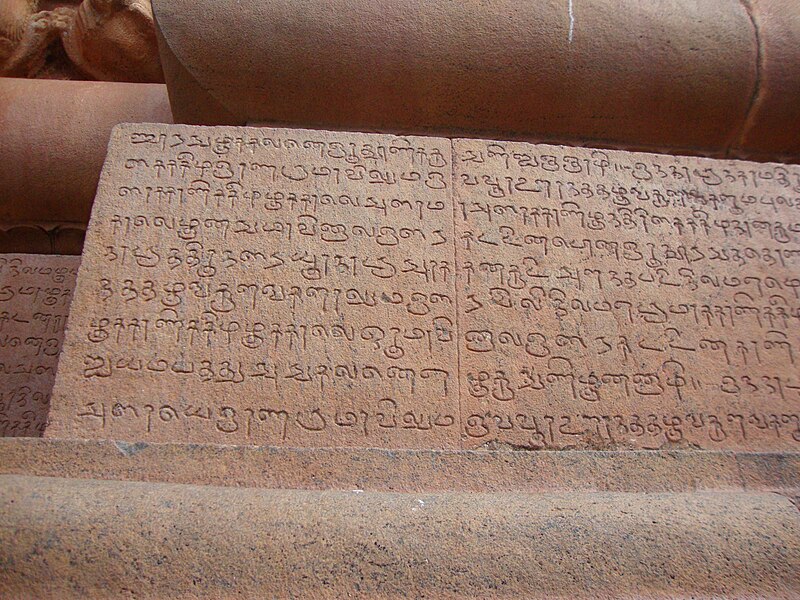
The top bulb like structure on top is a monolith and said to weigh more than 80 tonnes! An incline plane of about 6 km long was built to push the stone to the top. There is a bit of description of the way the temple was built and about the rule of the Chola dynasty at the entrance of the temple. This temple will trump one with tradition, spur with spirituality, move with music, inspire with inscriptions and make one exclaim at its enormity. Rarely one finds a temple that is a confluence of all this. There are detailed inscriptions on the walls of the main temple which seem to have been done with an eye at posterity. 


Image from Wiki 

All round the temple courtyard there is a long corridor which houses more than hundred Siva lingams. These corridors have an inner sanctum which houses the Shiva lingams and a hall way. 


At places one finds murals of episodes from mythology. These must have been very old and I must say they badly need a touch up. The installation of these lingams was not done by the redoubtable Raja Raja Chola but subsequently by one of the ministers. 


There are Ganesha and Kartikeya temples in the courtyard. The former is said to have been built by the Marathas. Thus unlike the many temples of the northern India that got looted and destroyed by invaders, the subsequent kings of other dynasties have only added to the temple not diminished it. 

After you go clockwise around the temple and walk on the corridors admiring the arrangement of numerous lingams, it is time to admire the other monolith on the campus. This is the huge bull that has been made by chiseling a 16' X 13' stone and discarding from that stone whatever was not bull! This and all the carvings here  and at Madurai made me think chisel should not be far behind the wheel in terms of best invention of man since fire! The ceiling of the mandap that houses the nandi (bull) is also tastefully painted. 


It is now time to enter the sanctum sanctorum of the Tanjore big temple, as it is popularly known. Unlike the many temples, the main deity, Lord Brihadeswara reveals Himself from a great distance. With a height of 3.3m, the huge lingam pygmies the priests who are offering the worship! Everything about the big temple is, you guessed it right, BIG - the Lord, the nandi, the vimanam (gopuram), the courtyard. There was a special worship on the day we visited and so we saw rice in huge plates appear like a few morsels once poured on the lingam. The Shiva lingam, ellipsoid shaped form of the formless Lord, is believed to be the microcosm which contains the macrocosm in It and so when It is propitiated, the entire universe is propitiated. In effect, this is a prayer for universal peace and welfare. If the Lord is Big, can His consort be small? Her name here is Brihannayaki! We paid our obeisance to Her. This temple is also said to have come up a few centuries later after the big one. 

Tanjore big temple is a shutterbug's delight. The tall gopurams that touch the blue sky make you trail your entourage at every point. This is one place that is loved by the kids, youth, middle aged and the elderly alike. If you are a resident of Thanjavur of course you can even walk into the temple with your books and immerse yourself in that vast calm. 


It was difficult to go away from here. We wanted to complete this in one hour but took three hours and still did not feel contented! But the juggernaut had to move on and so we were on our way to Srirangam, an island on the Kaveri river near Trichy, by 0230 pm. Trichy is 70 km away from Thanjavur and is connected by a national highway and so we were admiring the colorful gopuram of the Srirangam temple by 0400 pm. 


Sri Ranganatha Swamy temple at Sri Rangam is an important Vaishnavite shrine. The temple is about 160 acres in extent. It is a fair bit of walk to reach the main sanctum of Sri Ranganatha swamy. The crowd was again good and so we took the route that would ensure quicker darshan. A narrow entrance leads to the main sanctum where the Lord is Sri Mahavishnu in a reclining posture on the bed formed by the serpent Adi Sesha. The idol is well decorated in true Vaishnavite tradition. It is said the first darshan every morning is had by an elephant, horse and a cow. This is known as vishwaroopa darsanam. The elephant is said to trumpet Rangaa.... This must be witnessed sometime.

Sri Rangam is also home to Sri Jambhukeswara Swamy, known to represent the water element in the Panchabhoota kshetras of Lord Shiva present between Andhra Pradesh and Tamil Nadu. We however wanted to be home by night and so could not go there. 

We headed towards Namakkal from Trichy. Namakkal would complete a circle that you see below. Bangalore-Namakkal is the only road that seen twice in this journey. But unlike the Thanjavur Trichy road which is a national highway, the Trichy Namakkal stretch is a notional higway! It took almost two hours to negotiate about 80 km after which the runway greeted us and we reached Salem by 9 pm. After dinner break at Salem the journey was resumed and ended at home by 1 am. 


So that was the trip in which we covered 1250 kms in 3 days, paid about a thousand rupees in toll on the highways that ensured a smooth journey. We didn't have a loaded USB stick but had a good time chatting, singing, doing bhajan and munching. The trip planning, driving, navigation was largely done with help of google maps and my wife. It is an awesome tool and the detail to which India has been mapped showed the impact of the open approach to software.

Finally, tips for a happy trip. Break whenever required. Don't compete to meet either the time estimated by google maps or to beat it. Admire every hill and river that comes your way. Drive relaxed, enjoy every moment. After all, destination is the small part in life, the bigger part is the journey itself!

Monday, January 06, 2014

Ravishing Rameshwaram

We reached outskirts of Madurai by 7 pm and after a brief coffee break, we took the Kochi Dhanushkodi highway to Rameshwaram. The road is not NH4 but very decent. There are absolutely no potholes or speed breakers anywhere. It's a double lane where opposing vehicles comfortably cross. It can be a bit difficult to drive in the night, with the opposing traffic usually sporting high beams. This is somewhat insensitive to especially the bikers who come in the opposite direction. If you are a bit sleep deprived and tired, it can be a bit more taxing! Of course, the prospect of witnessing the crystal lingam (sphatika lingam) and sun rise in Rameshwaram kept me going. 

We reached Ramnad around 9 pm and broke for dinner. This was a good idea as Rameshwaram is a small place that sleeps somewhat early. Rameshwaram is about 50 km away and one hour drive from Ramnad. After about half an hour of drive from Ramnad, we were stopped for toll collection on the Pamban bridge. This 3 km bridge is built on the sea and connects the island of Rameshwaram with main land India. I must admit to being a bit nervous driving on the sea! :-) There is no feeling as assuring as terra firma! By the stroke of midnight I rested having negotiated 600 km to reach the southern island that is part of the legend of the epic Ramayana. Lord Rama is said to have installed the cosmic Siva lingam after conquering Ravana in Lanka. The same lord Siva is worshiped now as  Lord Ramanatha Swamy. The two aspects of divinity Lord Siva and Rama have a lot of appeal to me personally and so I hit the sack in eager anticipation of the day to follow.

By 4 am, the wake up song of the Lord Ramanatha Swamy rendered by the inimitable MS rent the air. It was divine as the chants merged in the sounds produced by the gentle waves of the sea. The practice to be followed at Rameshwaram is to have the darshan of the sphatika lingam (crystal lingam) before taking bath. This idol is kept for darshan only in the wee hours starting 4 am. It is a sight for the Gods to behold the crystal deity shining in the middle of many lamps. He reflects the light unto our eye and gives us absolute delight. After this wonderful darshan, we waited for the Sun to emerge from the eastern seas. This illusion of Sun emerging from seas or mountains or from distant horizon is always a spectacle to behold as it starts a new day in our lives. The soft rays of the rising Sun fell on the gopuram of the Rameshwaram temple and prodded us further.


We took a brief bath in the subdued sea adjoining the temple. Eons ago, Lord Rama stood with his bow and arrow to dry the sea that didn't provide Him a path to Lanka. The presiding deity of the seas is said to have emerged in utter scare and pleaded with Him to not dry him up. It is the deity of the seas that gave the idea of building of the Ram Setu. 

Then starts the lovely experience of taking bath in 22 sacred wells (known as theerthams, meaning holy water) that were dug around the temple. These wells have normal water if not sweet at a distance of just a few meters from the sea! There was a longish queue and after paying Rs. 25/- per person we went through the queue to well after well where designated employees would draw water in a bucket and pour on all assembled there. Who doesn't like getting drenched! We all thoroughly enjoyed this experience. This was akin to the rain dance that is found in many modern day resorts! Then it was time to go for the darshan of Lord Ramanathaswamy. The lingam here is one of the twelve jyothirlingas that are found in India and Nepal. It was quite crowded and we spent a good one hour in the queue before having the darshan of the Lord in the form of the jyothirlingam. After that we hastened for the darshan of Mother Parvatavardhini (the consort of Lord Ramanathaswamy). 

Lunch followed darshan and after a brief rest, it was time to start from Rameshwaram. There are other points of interest to be covered here. However, due to paucity of time and to reach Thanjavur by night, we had to start. The bridge across the sea was crowded as lot of people pulled over to have a glimpse of the collapsible Pamban railway bridge and enjoy the beauty of sea. 


Since Rameswaram is a peninsula you can find sea on either sides for sometime as you drive. And so on this east coast of India we can find the Sun setting into the sea as well. The picture below shows the waters rendered golden by the setting Sun.


Daughter was unhappy that we didn't spend enough time at the beach! Not to leave a bad taste, I pulled over after the Pamban bridge and spent some good time at the beach in which the major work was shell collection. There is wide variety of conches and shells we picked up in the few minutes we were there. It just made me wonder what else the mighty sea has in it!


As the Sun was about to set, we resumed our journey to Thanjavur, the town that has the big temple. Driving on the East Coast Road was a pleasure. Occasional bridges across rivers and a light house on the way reminded me that we are driving along the coast. After a dinner break at Pattukottai, Thanjavur was reached at 11 pm. 

Saturday, January 04, 2014

Magnificent Madurai

December is the best time to visit southern Tamil Nadu. With the onset of winter and the recession of the north eastern monsoon, weather in this region assumes a pleasant tone and welcomes you. The month of Margazhi celebrated with music and holy hymn adds to the fervor. So we set out from Bangalore to visit Madurai, Rameswaram, Thanjavur, Trichy in that order. I was at the wheel of my Swift Dzire.

We left home at 0645 am, mainly to avoid the busy Hosur road traffic. Still the Hosur stretch of the highway is a bit bad and so Hosur was hailed at 0745, Krishnagairi was kissed away at 0815, Dharmapuri dawned at 0900. After a short stretch break, Salem was seen off at 10am. After passing Salem, we had breakfast. The road got even better after Salem and Madurai beckoned by 1pm. After a lunch break, we drove straight to the majestic Meenakshi temple. Sighting the south gopuram  from a distance, I was dumbstruck by its sheer height! We hurried to the gopuram and couldn’t take our eyes off the detailed sculpting as we saw it with open mouthed wonder.


A closer view of the gopuram provides the amazing sculptures full of life and color. This gopuram houses more than 1000 episodes from mythology. The quantity and quality of effort that has gone in to it is worth many many awards and highest recognition by humanity.


Each gopuram has depiction of an important event apart from the numerous episodes. The south one has that of the celebrated Sri Dakshinamurthy, the south facing Lord Shiva Who is silent and imparting the knowledge of the Self to others.


Then there is this sculpture that caught the eye although we didn't know the story behind it. He has 24 heads in a pyramidal fashion and 48 hands to go with it.


Goddess Meenakshi and Lord Sundareswara on the bull is a constant feature on all the gopurams in accordance with the presiding deities of the temple.


I'm sure you'll not be bored with one more picture of the gopuram from this view.


And as we circumambulated in the clockwise fashion as is the right thing to do around a temple, we next encountered an equally majestic western gopuram.


This gopuram depicts the picture of Shiva giving a mango to Ganesha. This is the episode in which Ganesha wins the competition to circle the earth three times and wins the celestial mango as the prize.


As we proceed further, the north gopuram presents itself. As the temple website points out, this gopuram took longest to complete, almost five centuries! Hence this was known as motta gopuram (bald one!). This is also seen in the lack of a number of different sculpts on this gopuram. 


90 degrees to the right the eastern gopuram is revealed. This is the ideal entrance for the temple. 


There is a smaller gopuram next to the main one and that depicts the lovely spectacle of the divine marriage of Lord Sundareswara with Goddess Meenakshi which is attended by other gods.


It takes a minimum of one hour to go around the perimeter of the temple, admiring the art work of what appeared to be a golden period in south India. You can take any amount of time to admire the gopurams and will never cease to wonder. We then stood in the line to enter the darshan queue at 03:30pm. Camera needs to be left outside in a cloak room. You can sneak a few pics in the colorful corridors using your mobile camera. But don't try any of this near the sanctum! :-) 

The temple opens again the evening at 0400 pm. We went through the security check and spent the next couple of hours in the darshan of Goddess Meenakshi and Lord Sundareswara. The temple is spread on a huge area. All the ceilings are tastefully colored.


Some of the ceilings also depict episodes from mythology. The combination of colors is truly awesome, eye pleasing and eye catching. Then there is the customary pond in the temple. This temple can amaze you and entertain for a whole day. We were in Madurai for only 4 hours. By 6 pm, we came out of the temple and navigated through the busy lanes of this old city Madurai and in an hour we were zooming onward to Rameswaram to catch a glimpse of Lord Ramanathaswamy the next day. 

About Me

My photo
Love to blog. Every time I turn joyous or in extreme pain, I blog. Huge believer of 'charity begins at home'.